
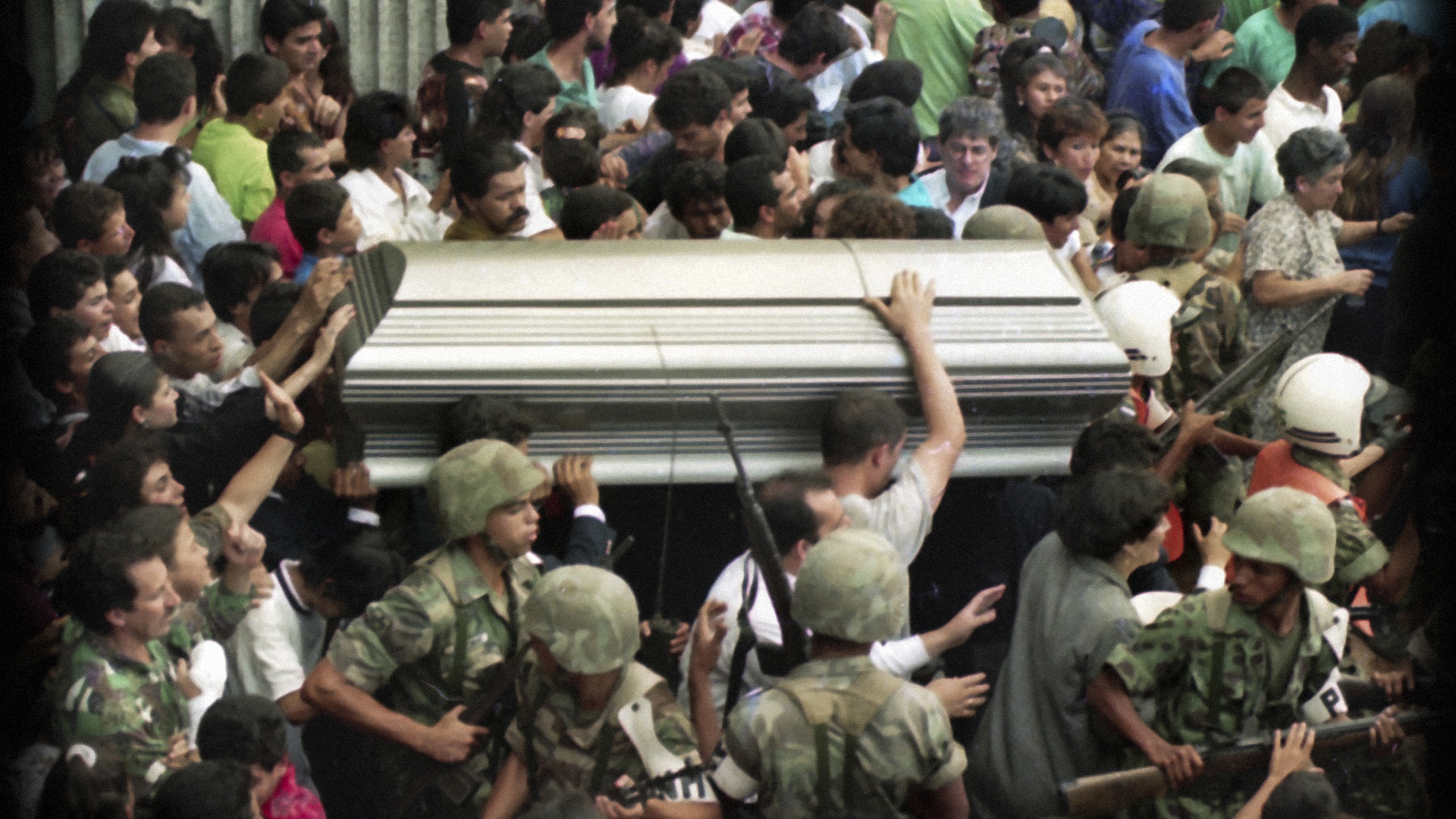
More than three decades after Pablo Escobar’s death, public fascination with his story continues to thrive — both within Colombia and around the world. While Escobar was a violent and dangerous figure responsible for countless atrocities, his legacy has transformed into a cultural phenomenon explored in documentaries, fictional series, tourism, and academic studies.
This article explores the enduring impact of Escobar’s death, the debate over how he is remembered, and how the media has helped shape his legacy into both cautionary tale and pop culture fixation.
How the Media Continues to Shape Escobar’s Image
The story of Pablo Escobar’s violent rise and dramatic fall has been retold countless times, but his death on a Medellín rooftop on December 2, 1993, remains one of the most documented and debated moments in modern criminal history.
According to a feature by CNN, Escobar’s death “became a symbol of Colombia’s effort to take back control from the cartels — yet it also marked the start of an era where his image was commodified”
The article highlights the paradox of Escobar’s story: his downfall is celebrated as a national victory, yet his likeness appears on souvenirs, in series like Narcos, and in countless social media posts — sometimes devoid of historical nuance.
Memory vs. Myth: A Divided Narrative
For Colombians, the memory of Escobar is complex. In Medellín, his legacy is often met with pain, anger, and frustration at the international media’s romanticization of his life.
Some residents, especially victims’ families, advocate for focusing on the human cost of his crimes rather than glorifying his persona. Memorial efforts, such as removing his gravestone or blocking tourist access to La Catedral (his former prison), are part of this attempt to reclaim the narrative.
Yet others, particularly outside Colombia, consume Escobar content primarily as entertainment — often unaware of the true scale of devastation he caused.
Pop Culture, Tourism, and Global Impact
The global appetite for crime stories and antiheroes has kept Escobar relevant in pop culture. From documentaries and biographies to themed tours and merchandise, his legacy has expanded far beyond Colombia.
This phenomenon raises ethical questions: is the widespread interest helping preserve history, or is it reducing real tragedies into binge-worthy content?
Streaming platforms, including Netflix and Amazon Prime, have capitalized on this interest, contributing to the mythologizing of his figure — while local communities continue to cope with the lasting effects of cartel violence.
Escobar’s Death in the Context of History
Despite the spectacle that surrounds his life, Escobar’s death was a major turning point for Colombia’s internal struggle against organized crime. It marked the end of the Medellín Cartel, the weakening of large-scale narcotrafficking empires, and the beginning of a long — and still unfinished — journey toward justice and institutional reform.
His death remains not just a historic moment but a lens through which Colombia’s resilience is viewed today.
For a detailed breakdown of the events leading to his death, check out “When Did Pablo Escobar Die and What Happened That Day?”, where we explore the final manhunt and its consequences.


